
FREDALARM / BLOG
The door that was left open every night
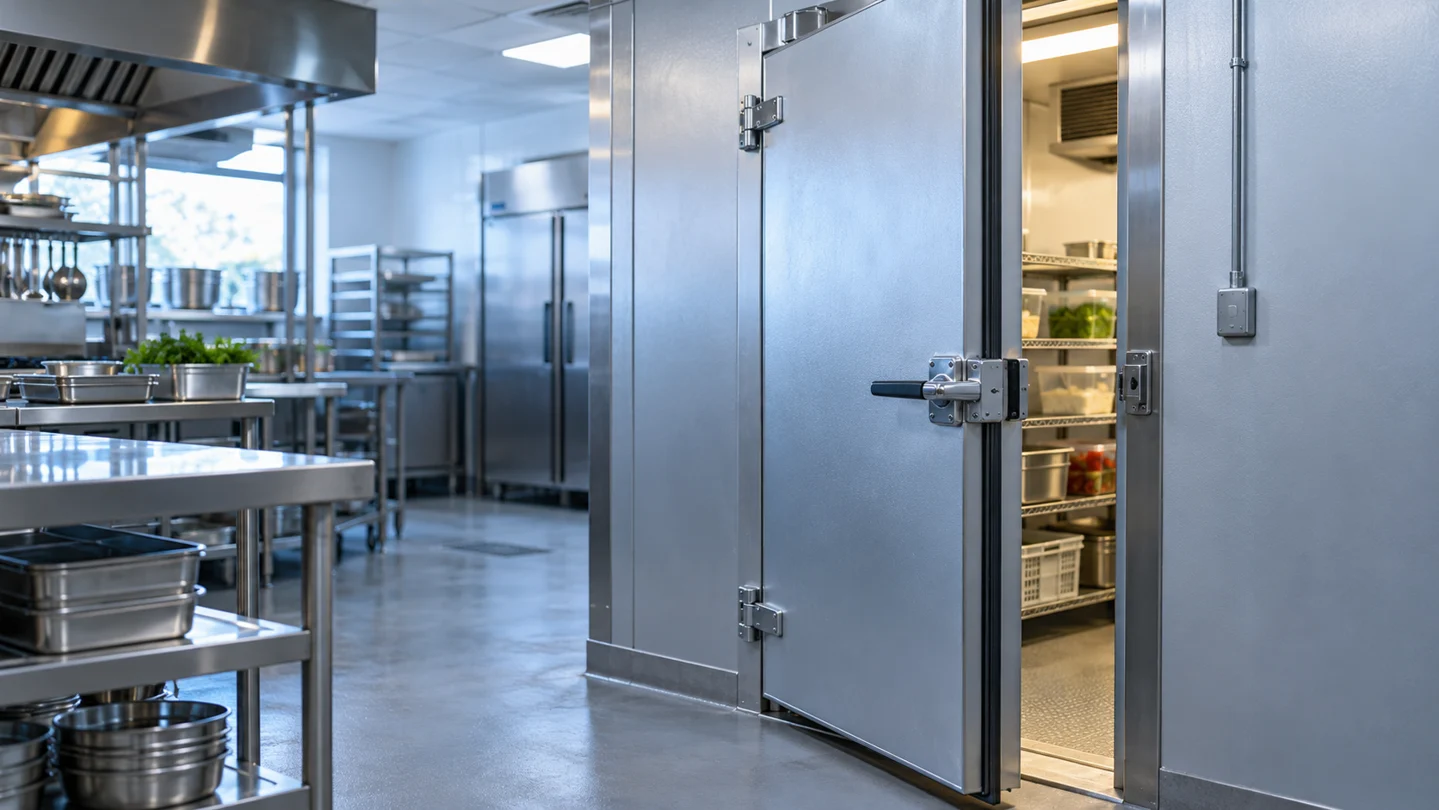
A half-open door seems like a small thing. Until it stays like that all night, with the cold room working and the cold escaping into the hallway.
The last tray comes in quickly. Someone pushes the door with their elbow, hears something like a closing, and continues with the service. It remains to collect, clean and prepare the next day. The door, meanwhile, has its own plans. It doesn't take a major breakdown to start losing cold: sometimes it's enough for no one to look again.
The mistake that was repeated
In hotels where we have installed our monitors, leaving cold room doors open at night was a recurring problem. After the installation, that routine changed: we went from finding regular openings at night to seeing the doors closed. It is the experience of those facilities, where a warning at the right time helped to correct the habit.
The change did not require converting all staff into refrigeration specialists. It consisted of making visible—and audible—something that could previously have gone unnoticed. A poorly closed door stops being a problem for the morning shift when someone finds out while they can still close it.
An open door doesn't have to end in an open night
The RCA1 Modbus and RCA PLC devices monitor temperature and door status. They have a 105 dB buzzer and a programmable opening time before the warning. This way the delay can be adapted to the work of each cold room: entering to look for product should not be treated the same as leaving the door open and forgotten.
When that time is exceeded, the audible warning demands attention in a way that is difficult to ignore. The objective is very practical: for someone to check what is happening and close the door if necessary. FredAlarm does not activate the closure or change the regulation of the refrigerator; notifies the human team to act.
From the kitchen you can see the whole
In addition to the warning next to the cold room, a monitoring screen in the kitchen allows you to check the status of the doors and temperatures. You don't have to go through all the cold rooms to know where to start. Those who have several establishments can bring them together on the same platform, organized by businesses and areas, with the access that corresponds to each user.
The devices communicate with their gateway via Modbus or PLC. This last option takes advantage of the electrical installation and is interesting in basements where carrying a communications cable would be a small task. The choice depends on the building and how the facility is organized.
Not all incidents start at the door
We have also found electrical protections that had tripped and cold rooms whose password had been changed by mistake. Monitoring made it possible to notice that something was not going well; Upon reviewing the installation, the cause was identified. The alarm alone does not say that a thermal has tripped nor does it necessarily read the controller's setpoint.
Patterns compatible with compressor and defrost cycles can be recognized in the temperature records. LoRa equipment allows you to follow this evolution on the graph; With Modbus and PLC, measurements, statuses and warnings also help to notice changes. Interpreting them together with the maintenance and use of the cold room provides more than looking at an isolated number.
The result that interests us
Fewer forgotten doors, more information for those working in the kitchen and a history to review later. A well-supervised facility still needs people: it makes things a little easier for them.
Get to know the RCA1 Modbus monitor or discover the RCA PLC alternative.