
FREDALARM / BLOG
Hospital refrigeration: a second look at temperature
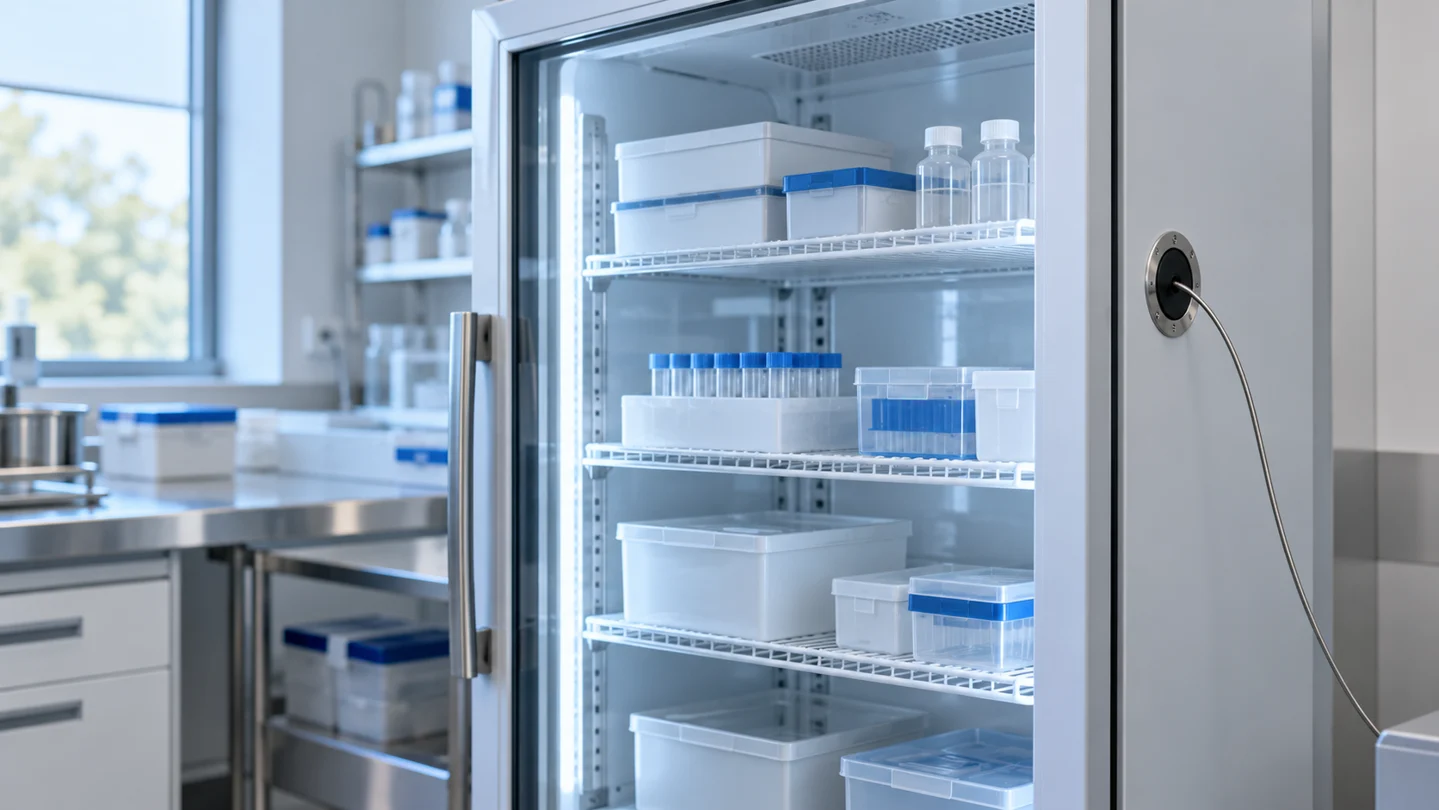
In a hospital or laboratory, preserving at the right temperature is part of daily work. Having another look at that temperature can help detect changes and reconstruct what happened.
The door opens, material enters, it closes again. The team regains their temperature and the day continues. A spot reading may seem correct and yet tell very little about the previous hours. To understand how a material has been preserved, it is also interesting to know how long it was outside its expected range and how it evolved afterwards.
A probe where it is interesting to measure
The FredAlarm temperature equipment with external PT100 probe allows the measurement point to be located separately from the electronics. This arrangement is useful to study complementary monitoring of low temperature storage points, selecting the appropriate probe and configuration for each installation.
Location matters: measuring next to the door is not the same as measuring in a representative storage area. Before defining a solution, you must know the working range, the type of material, the probe path and the conditions of the room. The selection of the assembly and its verification must respond to these requirements, without assuming that any PT100 is suitable for any application.
From measurement point to history
The equipment transmits the records by LoRa to the FredAlarm gateway. From it, the information reaches the platform to consult temperatures, review history and follow the configured warnings. Staff can organize points by area and establishment, rather than relying on scattered notes or visiting each refrigerator to see its status.
A desktop browser makes it easy to review the set and prepare reports. A monitoring screen allows you to keep selected points in view. Mobile consultation helps bring that information to the place where it is needed, always according to the permissions and configuration of the service.
What a curve counts
A graph allows you to observe the recovery after opening, compare days and recognize patterns compatible with compressor and defrost cycles. If the usual rhythm changes, a prolonged rise appears or the recovery takes longer, there is a reason to check the equipment. The interpretation corresponds to the person responsible for the installation and maintenance.
In other supervised installations we have found electrical protections tripped and settings modified by mistake after noticing anomalies. We don't present those examples as hospital cases: they show why keeping history is useful. The temperature warns of a consequence; Checking the box or controller allows you to investigate its cause.
Complement the center's procedure
FredAlarm is limited to monitoring. It does not control the compressor, it does not adjust the setpoint and it does not decide whether a material is still usable. That decision depends on the center's procedures, the corresponding person in charge, and the conservation requirements of each product.
Logs and reports can support incident review and internal documentation. Its use does not replace the verifications, calibrations or systems required by the specific application. In a health project it is advisable to agree from the beginning what should be measured, who receives the notifications and what action follows each one.
Start with the right questions
What is preserved? Under what conditions? How long can it take before someone acts? With these responses, useful supervision is designed, their behavior is checked and integrated into the center's work. Technology provides data; The value comes when that data reaches the people who can do something with it.
Get to know the LoRa equipment with external PT100 and tell us what you need to monitor.